
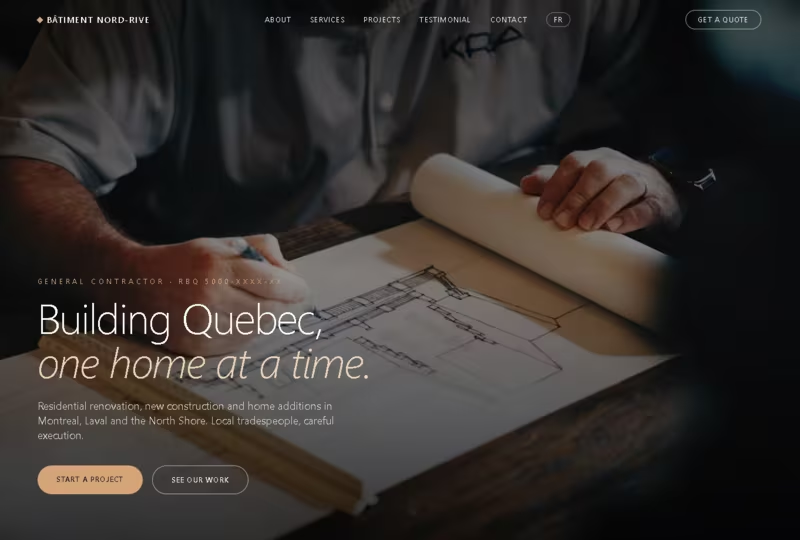
Six pages every contractor site needs
Past these six pages, most contractor sites just add friction.
Conversion elements that turn visitors into quote requests
A clear call-to-action without having to scroll, so a visitor doesn't have to hunt for it to ask for a quote.
A click-to-call or emergency contact button, visible on every page. Most contractor searches happen on a phone.
Before/after photo galleries, proof of real work convinces faster than any sales copy.
Trust badges, your licensing number, insurance, and association memberships, shown where visitors can see them.
Client reviews and testimonials, displayed on the homepage, not linked off to a third-party page.
Listed service areas, so local searches and local SEO actually connect you to nearby clients.
A fast, mobile-first design, since most people looking for a contractor are searching from a job site or their driveway, on a phone.
Mistakes that quietly cost you leads
A phone number that isn't clickable on mobile. About half of visitors give up rather than copy and dial it manually.
Stock photos instead of real job photos. Visitors can tell, and it undercuts the trust you're trying to build.
No reviews or testimonials anywhere on the site. Even a handful of real reviews changes how a visitor sees you.
A contact form buried at the bottom of a long page. If it takes effort to find, most visitors won't look for it.
No mention of which areas you serve. People searching "[service] near me" can't tell if you cover their address.
A slow site that takes more than a few seconds to load. Most visitors leave before it even finishes loading.
Questions contractors ask us about their websites
How can I attract more clients with my contractor website?
Put your call-to-action where visitors don't have to scroll to find it, show real photos of your work, and make your phone number clickable on every page. These three changes alone account for most of the difference between sites that generate leads and sites that just look nice.
What's the fastest way to get more contracting leads online?
Make sure you show up for local searches by listing your service areas clearly, and respond to new leads within minutes, not hours. Speed of response affects conversion as much as the site itself.
Do client reviews actually make a difference?
Yes. A visitor comparing a few contractors will usually pick the one with visible, recent reviews over the one with none, even if the work is comparable.
What should be on my homepage specifically?
A one-line description of what you do and where, a call-to-action, a few before/after photos, and a couple of testimonials. Everything else can live on its own page.
In short: the sites that generate the most contractor leads all share the same backbone:
- a clear call-to-action without having to scroll,
- real before/after photos, not stock images,
- an easy-to-find, clickable phone number,
- visible trust badges and reviews, and
- a fast, mobile-first build.
Agencies that specialize in contractor websites (Tech JSP included) build these elements in from day one instead of bolting them on after launch.